
Word Boards: Customizable AAC Layouts
Chad Sherman · on 24 July 2026 · 7 min read · Last reviewed 24 July 2026
Word boards are physical or digital tools that use **assistive speech software** to help individuals with communication difficulties express themselves through customizable layouts of words and symbols.
- Word boards can be physical boards with velcro-backed symbols or digital interfaces on tablets.
- They are widely used by individuals with autism, aphasia, or other speech impairments.
- Customizable layouts can include words, phrases, or even full sentences.
- According to the American Speech-Language-Hearing Association, AAC tools like word boards can significantly improve communication skills.
How to get an AAC device for free
To obtain an AAC device for free, you typically need to go through a formal evaluation process with a speech-language pathologist (SLP). The SLP will assess the individual's communication needs and may recommend a specific device. In the U.S., Medicaid and some private insurance plans cover AAC devices if they are deemed medically necessary. Additionally, organizations like the United Way or local disability support groups may offer assistance programs.
If you're looking for a free AAC app, there are several options available, such as **Speech Assistant AAC**, which offers a free version with basic features. Another popular choice is **Proloquo2Go**, which occasionally provides free trials or discounted versions for eligible users. For more details, check out the Keeble Keyboard: Adaptive Typing Review for adaptive typing solutions that can complement AAC devices.
What is the most popular AAC app?
The most popular AAC app is **Proloquo2Go**, known for its user-friendly interface and extensive customization options. It supports a wide range of communication needs and is compatible with both iOS and Android devices. Another highly regarded app is **TouchChat by Saltillo**, which offers pre-programmed vocabularies and the ability to create custom boards. Both apps are widely used by individuals with autism and other speech impairments.
For a more in-depth review of TouchChat, check out the Gestalt Language Processor: Natural Speech Path for insights into natural speech paths. If you're considering a physical AAC device, **Grid by SmartBox** is another top choice, offering a comprehensive range of features and customization options.
How much does an AAC device cost?
An AAC device's cost can vary widely depending on the type and features. Basic AAC apps like **Speech Assistant AAC** can be downloaded for free or at a low cost, typically ranging from $0 to $50. More advanced apps like **Proloquo2Go** can cost between $200 and $300. Dedicated AAC devices, such as those offered by **Grid by SmartBox**, can range from $1,000 to $5,000 or more, depending on the complexity and customization options.
For a detailed comparison of AAC apps and devices, refer to the pecs-for-communication for visual exchange systems and the pecs-for-autism-strategies for implementation strategies. If you're looking for a more affordable option, consider free AAC apps or seeking financial assistance through insurance or local support programs.
What are AAC apps?
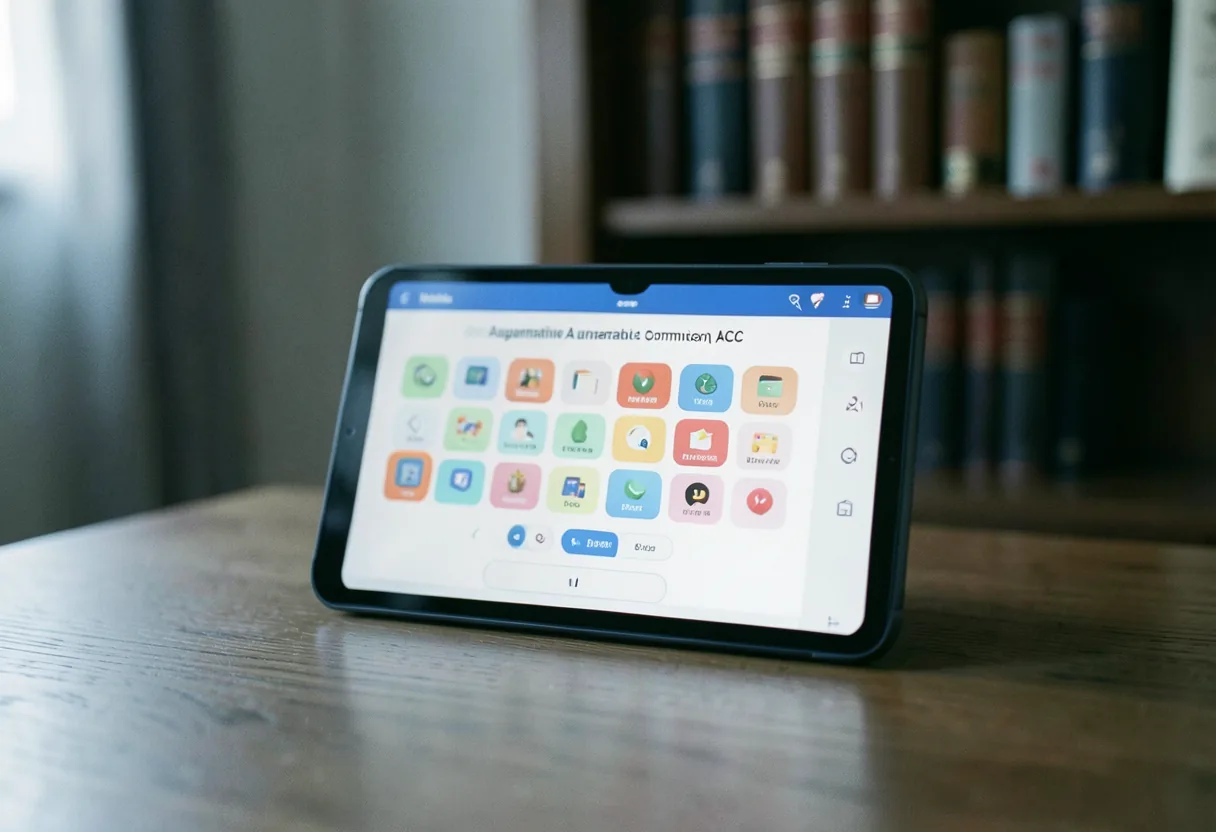
AAC apps are software applications designed to help individuals with speech impairments communicate effectively. These apps use text-to-speech technology, symbol-based communication, or a combination of both to facilitate expression. AAC apps can be used on smartphones, tablets, or dedicated AAC devices, making them highly accessible and portable.
Proloquo2Go offers symbol-based communication and a wide range of customizable vocabularies. Another popular app, **TouchChat by Saltillo**, provides pre-programmed vocabularies and the ability to create custom boards. These apps are designed to be user-friendly and adaptable to the individual's communication needs.
Checking out the Autism Speech Language: Developmental Milestones for developmental milestones and the PECS System: Step-by-Step Training Guide provides more information on AAC apps. If you're considering an AAC app, it's essential to evaluate your specific communication needs and choose an app that offers the necessary features and customization options.
Who would benefit from an AAC app?
Individuals with various speech and language impairments can benefit from using AAC apps. This includes people with autism spectrum disorder, aphasia, cerebral palsy, and other conditions that affect speech production. AAC apps can help these individuals express their thoughts, needs, and emotions more effectively, improving their overall communication skills and quality of life.
Children with autism may benefit from using **Proloquo2Go** to develop their language skills and communicate with peers and caregivers. Adults with aphasia, resulting from a stroke or brain injury, can use AAC apps to regain their ability to communicate effectively. The PECS for Communication: Visual Exchange System provides insights into visual exchange systems that can complement AAC apps for individuals with autism.
To determine if an AAC app is suitable for you or a loved one, consult with a speech-language pathologist who can assess your communication needs and recommend the most appropriate tools and strategies. For more information on AAC apps and their benefits, refer to the Gestalt Language Processor: Natural Speech Path for insights into natural speech paths.
Review of TouchChat AAC App
**TouchChat AAC app** by Saltillo is a comprehensive communication tool designed for individuals with speech impairments. It offers a wide range of pre-programmed vocabularies and the ability to create custom boards, making it highly adaptable to the user's needs. The app features high-quality text-to-speech voices and supports multiple languages, enhancing its usability for a diverse range of users.
One of the standout features of TouchChat is its user-friendly interface, which allows for easy navigation and customization. The app also offers various themes and layouts to suit different preferences and communication styles. For example, users can choose from grid-based layouts or more visual, symbol-based interfaces, depending on their needs.
Check out the PECS for Autism: Implementation Strategies for implementation strategies and the Autism Speech Language: Developmental Milestones for developmental milestones to get a more detailed review of TouchChat. If you're considering TouchChat as an AAC solution, it's essential to explore its features and customization options to ensure it meets your specific communication needs.
Comparison of AAC Apps
Choosing the right AAC app depends on your specific communication needs and preferences. Here's a comparison of some popular AAC apps to help you make an informed decision.
| AAC App | Key Features | Cost | Compatibility |
|---|---|---|---|
| Proloquo2Go | Symbol-based communication, customizable vocabularies, text-to-speech | $249.99 | iOS, Android |
| TouchChat by Saltillo | Pre-programmed vocabularies, custom boards, multiple languages | $299.99 | iOS, Android |
| Speech Assistant AAC | Text-to-speech, customizable phrases, portable | Free (basic version), $4.99 (pro version) | iOS, Android |
| Grid by SmartBox | Comprehensive customization, symbol-based communication, dedicated device | $1,000 - $5,000+ | Dedicated device |
Keeble Keyboard Review offers more information on AAC apps and their features. If you're looking for a free AAC app, **Speech Assistant AAC** offers a basic version at no cost, making it an accessible option for many users.
Steps to Implement an AAC App
Implementing an AAC app involves several steps to ensure it meets the user's communication needs effectively. Here are some key steps to follow:
- Assessment: Consult with a speech-language pathologist to assess the individual's communication needs and determine the most suitable AAC app.
- Selection: Choose an AAC app that offers the necessary features and customization options based on the assessment.
- Customization: Work with the SLP to customize the app's vocabulary, layouts, and settings to match the user's preferences and communication style.
- Training: Provide training for the user, caregivers, and other support individuals to ensure they can use the app effectively.
- Monitoring: Regularly review and adjust the app's settings and vocabularies as the user's communication skills develop and change.
- Integration: Integrate the AAC app into the user's daily routines and activities to promote consistent use and skill development.
Detailed guidance on implementing an AAC app is available through the PECS System: Step-by-Step Training Guide for step-by-step training guides and the Autism Speech Language: Developmental Milestones for developmental milestones. If you're considering an AAC app, it's essential to follow these steps to ensure it meets your specific communication needs and promotes effective communication.
Benefits of Using Word Boards
Word boards offer several benefits for individuals with communication difficulties. They provide a visual and tactile way to express thoughts and needs, making communication more accessible and less frustrating. Word boards can also help improve language skills by encouraging the use of vocabulary and sentence structure. Additionally, they can be easily customized to suit the user's preferences and communication style, enhancing their effectiveness and usability.
Individuals with autism may benefit from using word boards to develop their language skills and communicate with peers and caregivers. The PECS for Communication: Visual Exchange System provides insights into visual exchange systems that can complement word boards for individuals with autism. If you're considering using word boards as an AAC solution, it's essential to explore their benefits and customization options to ensure they meet your specific communication needs.
Boards are a valuable tool in assistive speech software, offering a flexible and customizable way to enhance communication for individuals with speech impairments.
Frequently asked questions
What exactly are word boards in AAC?
Word boards are visual layouts used in Augmentative and Alternative Communication (AAC) to help individuals express themselves. They consist of symbols, pictures, or words arranged in a structured format. Users point to or select these elements to convey messages, making communication accessible for those with speech difficulties.
How do customizable AAC layouts improve communication?
Customizable layouts allow users to tailor the board to their specific needs. For example, a board can prioritize vocabulary relevant to daily routines or hobbies. This personalization reduces frustration and increases efficiency, as users can quickly access the words they need most often.
Can word boards be used for different age groups?
Absolutely. Word boards can be designed for children, adults, or seniors. For instance, a child's board might feature bright colors and simple images, while an adult's board could include more complex vocabulary. The adaptability ensures relevance and usability across various stages of life.
What tools are available for creating custom word boards?
Several software programs and apps enable users to design custom word boards. Tools like Boardmaker or GoTalk offer templates and customization options. Additionally, some platforms allow collaboration with speech therapists to ensure the board meets the user's specific communication needs.