Comprehensive Text to Speech Software Guide
Text to Speech Software
Text-to-speech (TTS) is the process of converting written text into audible synthesized speech through a computer-controlled system.
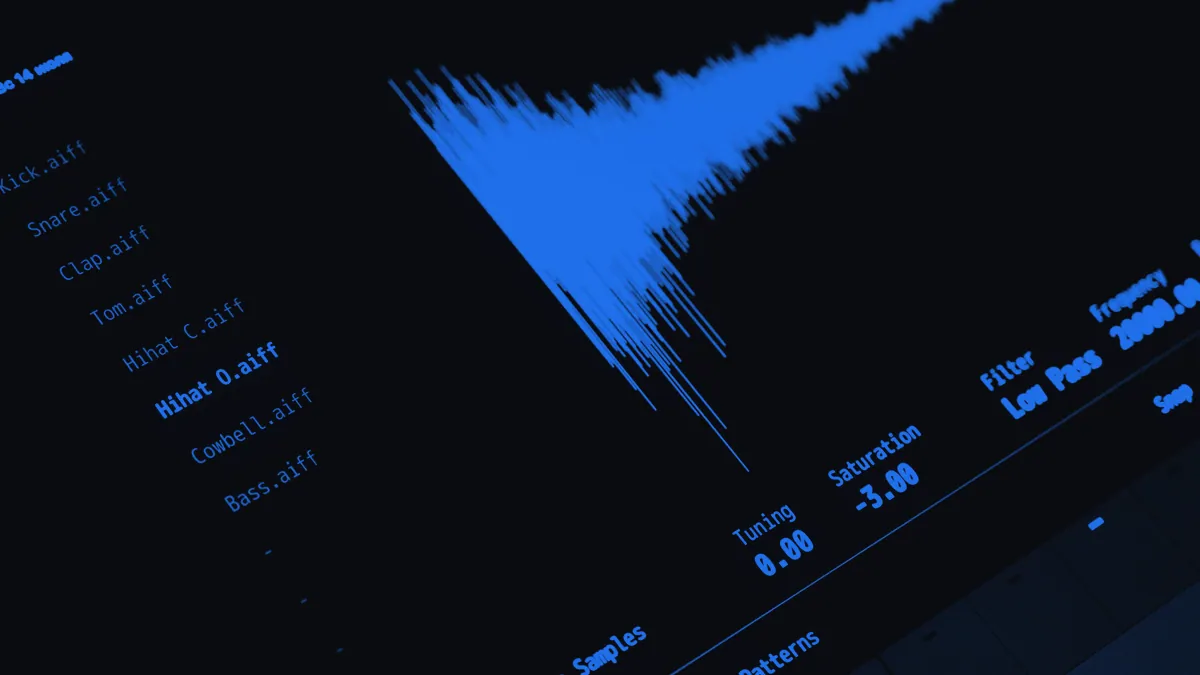
At its most fundamental level, text-to-speech technology bridges the gap between human written language and spoken communication. The process involves several complex stages: first, the system must analyze the text to understand its structure, including words, sentences, and punctuation (text analysis); second, it must convert these linguistic units into a phonetic representation (text-to-phoneme conversion); and third, it must transform these phonemes into an acoustic signal that sounds like human speech (speech synthesis).
The evolution of text-to-speech technology
The evolution of text-to-speech technology is marked by a transition from highly rule-based, robotic sounding systems to the highly naturalistic neural models used today. Each phase has introduced new methods for improving the intelligibility and expressiveness of the synthesized voice.
The 3 main evolutionary stages of TTS include:
- Rule-Based/Formant Synthesis: Early systems, such as the classic DECtalk, used mathematical models to generate speech from scratch. While these systems were highly intelligible and required very little computational power, they often sounded distinctly robotic and lacked the subtle nuances of human prosody. Formant synthesis works by simulating the resonances of the human vocal tract using mathematical rules, making it highly parameterizable but limited in naturalness.
- Concatenative Synthesis: This method involves stitching together small segments of pre-recorded human speech (units) to form new sentences. While it produced much more natural-sounding speech than formant synthesis, it often suffered from "glitches" at the boundaries between segments and required massive databases of recorded audio to cover various phonetic combinations.
- Neural/Parametric Synthesis: The current state-of-the-art uses deep learning models (such as WaveNet or Tacotron) to predict the acoustic features of speech. These systems can generate incredibly human-like voices that are nearly indistinguishable from real recordings, though they require significant computational resources. Neural TTS models learn the statistical distribution of speech patterns, allowing for much higher fluidity and expressive capability.
Core components of a text-to-speech system
To produce high-quality audio, a modern text-to-speech system must coordinate several specialized sub-systems that work in a tightly integrated pipeline.
The essential components of a TTS pipeline are:
- Text Analysis Engine: This stage handles the linguistic preprocessing. It performs tasks such as tokenization (splitting text into words), part-of-speech tagging (identifying nouns, verbs, etc.), and normalization (converting "$10" to "ten dollars" or "St." to "Street" or "Saint"). Proper normalization is critical for ensuring that abbreviations and symbols are interpreted correctly in context.
- Phonetic Generator: This component takes the normalized text and determines the correct sequence of phonemes. It must handle complexities like homographs (words that are spelled the same but pronounced differently, like "read" vs "read") by using context clues from the text analysis stage. This process often relies on large pronunciation dictionaries and linguistic rules.
- Prosody Model: This model determines the "music" of the speech, the rhythm, stress, and intonation. It ensures that the synthesized voice doesn't sound monotone by applying appropriate pitch changes and pauses. Effective prosody is what makes a voice sound engaging rather than robotic.
- Vocoder (Voice Coder): The final stage is the vocoder, which converts the linguistic and prosodic features into the actual waveform or audio signal that the user hears. In neural systems, the vocoder is often a deep neural network responsible for generating the high-fidelity audio samples.
These 4 essential stages, analysis, phonetics, prosody, and vocoding, form the backbone of the technology.
Practical applications of text-to-speech
Text-to-speech technology has moved from a niche research tool to a ubiquitous part of modern digital life, powering a wide variety of applications across different industries and accessibility needs.
Common implementations of TTS include:
- Assistive Technology: TTS is a critical tool for individuals with visual impairments or reading disabilities, providing them with access to written information through spoken word. This includes screen readers that facilitate web navigation and reading assistance for those with dyslexia.
- Virtual Assistants: Smart devices like the Google Assistant or Amazon Alexa rely on advanced TTS to interact with users in a natural, conversational manner. These systems must handle rapid-fire interactions with minimal latency to maintain the illusion of conversation.
- Automated Customer Service: Many companies use TTS in phone systems and automated kiosks to provide information and guidance to customers. This allows for scalable, 24/7 customer engagement without the immediate need for human operators.
- Content Consumption: TTS engines power "read aloud" features in web browsers, e-readers, and news applications, allowing users to consume text while multitasking. This has significantly increased accessibility for commuters and multitaskers.
Emerging trends in speech synthesis
The field of speech synthesis is currently undergoing a massive shift due to the advent of generative AI and large language models (LLMs). These advancements are moving the industry beyond simple text-to-speech toward true "speech-to-speech" capabilities.
Key emerging trends include:
- Emotional Expressiveness: Modern research focuses on infusing synthesized voices with emotional intelligence. Future models will be able to convey nuanced emotions such as excitement, sadness, or sarcasm by subtly altering prosody and timbre in real-time. This is achieved by conditioning the neural models on emotional tags or style vectors.
- Zero-Shot Voice Cloning: New neural architectures allow for high-fidelity voice cloning from incredibly short audio samples. This technology enables the creation of personalized digital avatars that sound exactly like a specific individual. Such capabilities are being explored for media localization and digital legacy projects.
- Low-Latency Interaction: For real-time conversational AI, reducing the "turn-taking" delay is critical. Ongoing developments in lightweight neural architectures aim to bring high-quality, expressive TTS to edge devices with minimal latency. This is essential for devices like smart glasses and mobile-first AI agents. For instance, achieving a sub-100 ms latency is a major research goal for next-generation mobile AI assistants.
Where to go next
Where to go next in your exploration of the history of speech synthesis might involve exploring the evolution of formant-based systems or the development of modern neural models. Understanding the architectural differences between these technologies can provide a foundation for grasping how speech technology continues to evolve. You might also look into how different synthesis methods are applied in various specialized domains, such as accessibility or digital media.