Autism Speech Language: Developmental Milestones
Jason Holloway · on 24 July 2026 · 7 min read · Last reviewed 24 July 2026
Autism speech language tools, including assistive speech software, help individuals with autism spectrum disorder (ASD) communicate more effectively by compensating for language delays or impairments.
- According to the Centers for Disease Control and Prevention (CDC), about 1 in 36 children have been identified with autism spectrum disorder (ASD).
- Speech delays are common in autism, with some children never developing spoken language.
- Assistive speech software can be tailored to individual needs, supporting both simple and complex communication.
- These tools often integrate with other technologies, such as eye-tracking devices, for enhanced accessibility.
What are AAC Apps?
AAC (Augmentative and Alternative Communication) apps provide nonverbal or minimally verbal individuals with a way to express themselves using symbols, pictures, or text-to-speech output.
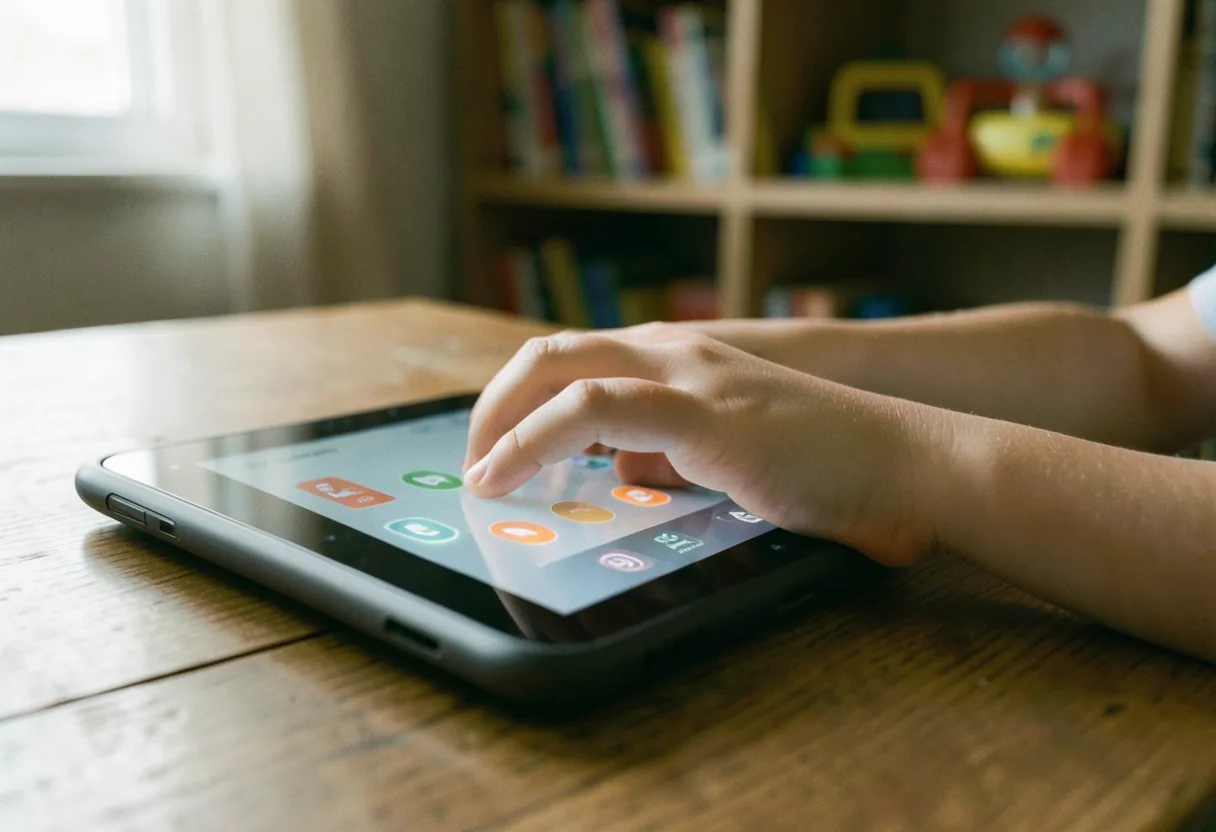
AAC apps come in various forms, from simple picture-based systems to complex language-generating devices. They are designed to support individuals with autism who struggle with verbal communication. These apps can be used on tablets, smartphones, or dedicated speech-generating devices. They often include features like customizable vocabulary, pre-programmed phrases, and speech output.
For example, Proloquo2Go is a widely-used AAC app with extensive vocabulary and customization features. Users can design personalized grids with symbols and text, enhancing communication. The app supports various languages and accents, serving a broad user base.
Who Would Benefit from an AAC App?
Individuals with autism who have difficulty with spoken language can significantly benefit from AAC apps, as these tools provide an alternative means of communication.
AAC apps are particularly beneficial for nonverbal individuals with autism, as well as those with limited speech. These tools can help users communicate more effectively in various settings, including school, home, and social environments. Additionally, AAC apps can support language development and literacy skills, making them a valuable resource for both children and adults with autism.
For instance, TouchChat by Saltillo is another widely used AAC app that provides a comprehensive communication solution. It includes a built-in vocabulary, customizable pages, and the ability to record custom messages. TouchChat also supports multiple languages and offers a range of accessories, such as switches and eye-tracking devices, to enhance usability.
How to Get an AAC Device for Free?
To obtain an AAC device for free, you can explore several avenues, including insurance coverage, school programs, and nonprofit organizations.
One way to get an AAC device for free is through your insurance provider. Many insurance plans cover speech-generating devices as durable medical equipment (DME). You will need a prescription from a healthcare professional and may have to go through an authorization process. Additionally, some states offer Medicaid waivers that cover AAC devices for eligible individuals.
School programs are another option for obtaining a free AAC device. Under the Individuals with Disabilities Education Act (IDEA), schools are required to provide assistive technology to students with disabilities who need it to access their education. You can work with your child's special education team to determine if an AAC device is appropriate and request one as part of their Individualized Education Program (IEP).
Nonprofit organizations, such as the Autism Speaks and the United Way, also offer resources and financial assistance for AAC devices. These organizations may provide grants, loans, or other forms of support to help cover the cost of assistive technology.
What is the Most Popular AAC App?
The most popular AAC app is Proloquo2Go, known for its extensive vocabulary, customization options, and user-friendly interface.
Proloquo2Go is designed to support individuals of all ages and abilities, from early communicators to advanced language users. The app offers a comprehensive vocabulary, including core words, fringe vocabulary, and customizable categories. It also supports multiple languages and accents, making it a versatile tool for users around the world.
In addition to its reliable vocabulary, Proloquo2Go offers a range of customization options. Users can create personalized grids with symbols, text, and recorded messages. The app also includes features like word prediction, phrase banks, and the ability to record custom messages. These customization options make it easier for users to communicate effectively and express their unique needs and preferences.
How Much Does an AAC Device Cost?
AAC device costs vary widely, ranging from free apps to high-end dedicated speech-generating devices that can cost thousands of dollars.
The cost of an AAC device depends on several factors, including the type of device, its features, and whether it is purchased outright or covered by insurance. Free AAC apps, such as Word Boards: Customizable AAC Layouts and PECS for Communication: Visual Exchange System, offer basic communication support at no cost. These apps can be a good starting point for individuals with autism who are new to AAC or have limited budgets.
On the other end of the spectrum, dedicated speech-generating devices can cost thousands of dollars. These devices often come with advanced features, such as eye-tracking technology, customizable vocabularies, and multiple language support. For example, the Keeble Keyboard: Adaptive Typing Review is a popular adaptive typing tool that can be used in conjunction with AAC apps to enhance communication.
What is the Speech Assist App for Free?
Speech Assist apps, such as Gestalt Language Processor: Natural Speech Path and PECS for Autism: Implementation Strategies, offer free communication support for individuals with autism.
In my experience: Free speech assist apps can be a significant help for families and individuals seeking affordable communication solutions.
Speech Assist apps provide a range of features to support nonverbal or minimally verbal individuals with autism. These apps often include picture-based communication, text-to-speech output, and customizable vocabularies. They can be used on tablets, smartphones, or computers, making them accessible and convenient.
For example, the Gestalt Language Processor: Natural Speech Path is a free AAC app that supports natural speech development. It allows users to create personalized phrases and sentences using a combination of symbols and text. The app also includes features like word prediction, phrase banks, and the ability to record custom messages.
Communication Apps for Nonverbal Adults
Communication apps for nonverbal adults, such as Grid by SmartBox and TouchChat by Saltillo, provide advanced features tailored to the needs of older users.
Communication apps for nonverbal adults often include advanced features, such as customizable vocabularies, multiple language support, and the ability to integrate with other assistive technologies. For example, Grid by SmartBox offers a range of communication solutions, including eye-tracking technology and customizable grids. The app also includes features like word prediction, phrase banks, and the ability to record custom messages.
TouchChat by Saltillo is another popular communication app for nonverbal adults. It offers a comprehensive vocabulary, customizable pages, and the ability to record custom messages. TouchChat also supports multiple languages and offers a range of accessories, such as switches and eye-tracking devices, to enhance usability.
AAC Curriculum
An AAC curriculum provides structured learning opportunities to help individuals with autism develop and improve their communication skills using assistive speech software.
An AAC curriculum typically includes a range of activities and exercises designed to support language development, literacy skills, and social communication. These activities may include practicing vocabulary, creating personalized phrases, and using AAC devices in real-life situations. The curriculum may also include training for caregivers, teachers, and other support personnel to ensure consistent and effective use of AAC tools.
For example, the PECS System: Step-by-Step Training Guide is a popular AAC curriculum that focuses on teaching individuals with autism to use picture-based communication systems. The curriculum includes a range of activities and exercises, as well as training for caregivers and teachers. It is designed to support individuals of all ages and abilities, from early communicators to advanced language users.
Assistive speech software and AAC apps play a crucial role in supporting the communication needs of individuals with autism. By providing alternative means of expression, these tools empower users to connect with others, express their needs and desires, and participate more fully in their communities.
Frequently asked questions
At what age do children typically begin combining words into phrases?
Most children start combining words into phrases between 18 and 24 months. For example, they might say 'more milk' or 'go bye-bye.' However, children with autism may reach this milestone later or not at all, often focusing on single words or repeating phrases they've heard.
How do speech delays manifest in autistic children?
Autistic children might have limited vocabulary, repeat words or phrases (echolalia), or struggle with conversational turn-taking. Some may not speak at all, relying on gestures or alternative communication methods. Their speech might also lack typical intonation, sounding flat or robotic.
What are some nonverbal communication signs to watch for in autistic toddlers?
Nonverbal signs include limited eye contact, reduced use of gestures (like pointing or waving), and difficulty understanding or using facial expressions. Some autistic toddlers might engage in repetitive movements (stimming) or have unusual responses to sensory inputs, like covering their ears at normal conversation volumes.
Can autistic children eventually develop fluent speech?
Yes, many autistic children improve their speech skills with targeted interventions like speech therapy, applied behavior analysis (ABA), or picture exchange communication systems (PECS). Progress varies widely; some children gain near-typical speech, while others may always need alternative communication methods. Early intervention typically yields the best outcomes.