Mean Length of Utterance: Tracking Progress
Chad Sherman · on 24 July 2026 · 7 min read · Last reviewed 24 July 2026
Mean length of utterance (MLU) is a measure of linguistic productivity in children, calculated by averaging the number of morphemes per utterance over a sample of 100 spoken utterances.
- MLU is typically measured in morphemes (the smallest units of meaning in language) rather than words.
- At age 3, typically developing children have an MLU of about 3 to 4 morphemes per utterance, according to research by Roger Brown.
- The MLU range for children aged 2 to 5 can vary widely, typically between 1.0 and 5.0 morphemes.
- MLU is used to track language development and set goals in speech therapy.
How is mean length of utterance calculated?
To calculate MLU, a speech-language pathologist collects a sample of 100 utterances from the child during a structured or unstructured activity. They then count the total number of morphemes in those utterances and divide by the number of utterances.
The formula is:
MLU = Total number of morphemes / Total number of utterances
In my experience, this process is often done during play-based assessments where the child feels most comfortable communicating.
Examples of morphemes in child speech
- The utterance "doggie" contains two morphemes: "dog" and the diminutive "-ie".
- The utterance "mommy go" contains three morphemes: "momm", "y", and "go".
- The utterance "I want milk" contains four morphemes: "I", "want", "milk", and the contraction "-'s" for "is" if implied.
What does mean length of utterance tell us about language development?
MLU provides insight into a child's language complexity and grammatical development.
A higher MLU generally indicates that a child is using more complex sentences with more grammatical markers, while a lower MLU suggests simpler, less complex speech. For example, a child with an MLU of 1.0 might say single words like "ball" or "milk," while a child with an MLU of 4.0 might say sentences like "I want more juice" or "Mommy go work."
Speech-language pathologists use MLU to track progress and set goals in speech therapy for 3-year-olds.
How can assistive speech software help improve mean length of utterance?
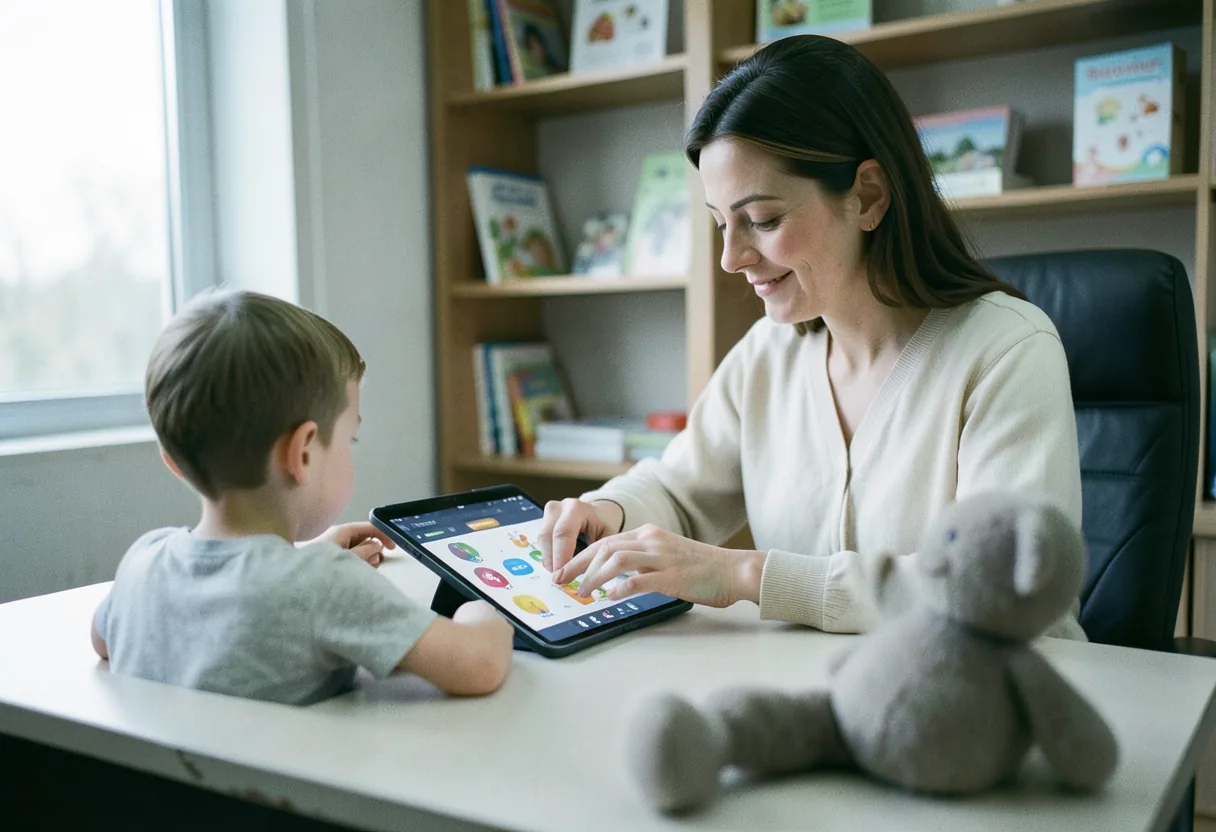
Assistive speech software, also known as augmentative and alternative communication (AAC) apps, can support language development in children with speech delays or disorders.
Key features of AAC apps that support MLU
- Visual supports: AAC apps use symbols or pictures to represent words and phrases, making it easier for children to construct sentences.
- Structured language input: Many AAC apps provide models of grammatically correct sentences, helping children learn to combine words and morphemes.
- Customizable vocabulary: AAC apps allow speech-language pathologists to tailor the vocabulary to the child's needs and abilities, promoting language growth.
How to get an AAC device for free?
There are several ways to obtain an AAC device for free or at a reduced cost.
To do so, start by consulting with a speech-language pathologist (SLP) who can assess the child's needs and recommend appropriate AAC options. Many schools and early intervention programs have AAC devices available for loan or rent.
Additionally, some organizations and charities provide grants or donations to help families obtain AAC devices. For example, the Assistive Technology Industry Association (ATIA) offers resources and information on funding options. You can also check with local nonprofits or religious organizations, as they sometimes have programs to help families access assistive technology.
What is the most popular AAC app?
The most popular AAC apps include Proloquo2Go, TouchChat by Saltillo, and Grid by SmartBox.
In my experience, Proloquo2Go is widely used due to its comprehensive features and customizable options. It offers a natural-sounding text-to-speech voice and a wide range of symbols to support language development.
TouchChat by Saltillo is another popular choice, known for its user-friendly interface and extensive vocabulary options. Grid by SmartBox is praised for its flexibility and adaptability to different communication needs.
Comparison of popular AAC apps
| AAC App | Platform | Key Features | Cost |
|---|---|---|---|
| Proloquo2Go | iOS, Android | Natural-sounding voices, customizable vocabulary, symbol support | One-time purchase or subscription |
| TouchChat by Saltillo | iOS, Android | User-friendly interface, extensive vocabulary, pre-programmed phrases | One-time purchase |
| Grid by SmartBox | Windows, iOS, Android | Flexible grid layouts, customizable vocabulary, symbol support | Subscription-based |
How much does an AAC device cost?
An AAC device's cost can vary widely depending on the type and features.
Low-tech AAC options, such as communication boards or simple picture cards, can cost between $20 and $100.
High-tech AAC devices, such as dedicated speech-generating devices, can range from $500 to $10,000 or more.
AAC apps for tablets or smartphones typically cost between $50 and $300 for a one-time purchase, or a subscription fee for ongoing access.
What are some free speech assist apps?
There are several free speech assist apps available that can support communication and language development.
Speech Assistant AAC is a popular free app that offers a customizable communication board with text-to-speech capabilities. It allows users to create personalized phrases and sentences, making it a versatile tool for various communication needs.
Another option is AAC Speech Buddy, which provides a simple interface with pre-programmed phrases and the ability to record custom messages. This app is particularly useful for individuals who need quick and easy access to common phrases.
Free AAC apps for Android
| AAC App | Key Features | Platform |
|---|---|---|
| Speech Assistant AAC | Customizable communication board, text-to-speech, phrase creation | Android |
| AAC Speech Buddy | Pre-programmed phrases, custom message recording, simple interface | Android |
| CoughDrop | Cloud-based, symbol support, multi-user access | Android, iOS |
Who would benefit from an AAC app?
Children and adults with speech delays, language disorders, or motor speech disorders can benefit from using AAC apps.
For example, children with autism spectrum disorder (ASD) or developmental delays often use AAC apps to support their communication skills.
Adults with aphasia, stroke-related speech impairments, or progressive neurological conditions can also benefit from AAC apps to maintain their ability to communicate effectively.
How to choose the right AAC app for a child?
To choose the right AAC app for a child, consider the following steps:
- Assess the child's needs: Consult with a speech-language pathologist to determine the child's specific communication needs and goals.
- Evaluate app features: Look for apps that offer customizable vocabulary, symbol support, and text-to-speech capabilities.
- Consider user-friendliness: Choose an app with an intuitive interface that the child can easily navigate.
- Check for compatibility: Ensure the app is compatible with the devices you plan to use, such as tablets or smartphones.
- Seek professional guidance: Work with the child's speech-language pathologist to select the most appropriate AAC app and implement it effectively.
How to track progress with mean length of utterance?
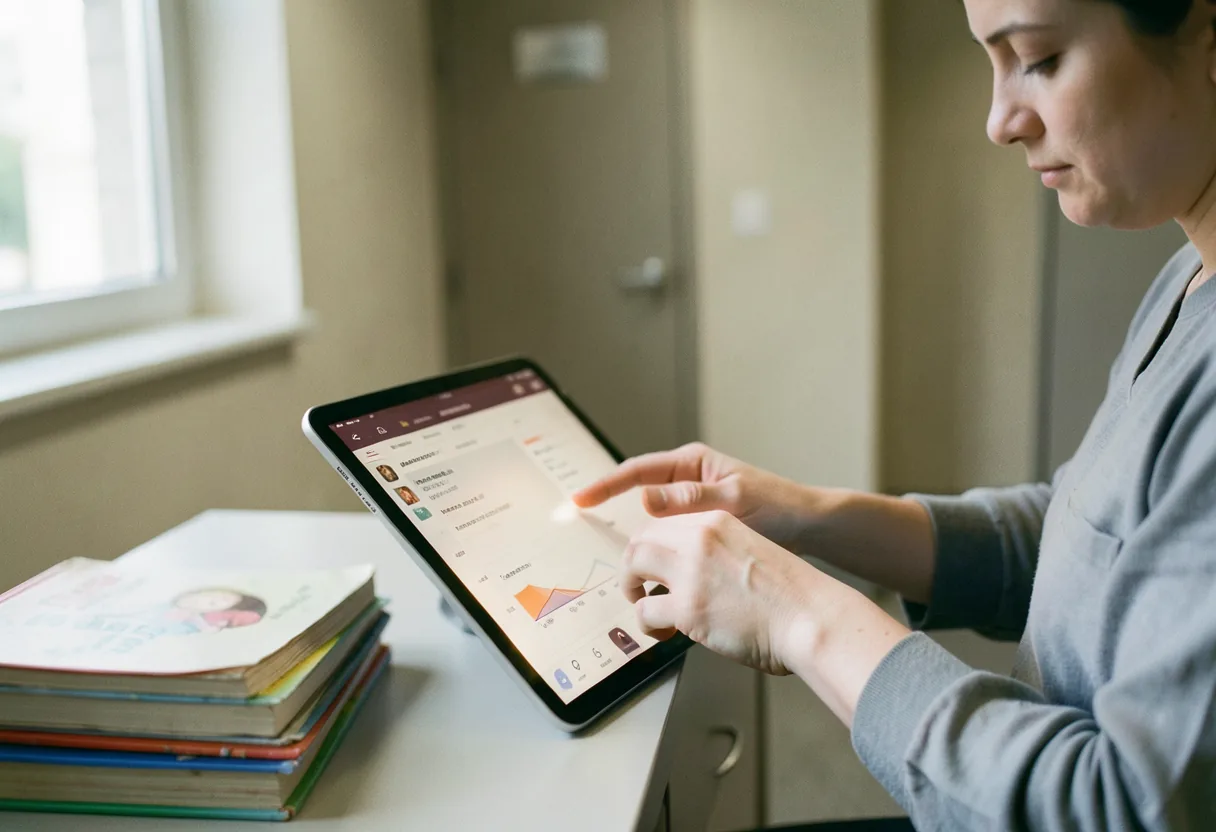
Tracking progress with MLU involves regular assessments and monitoring the child's language development over time.
Steps to track progress with MLU
- Conduct regular assessments: Collect a sample of 100 utterances from the child during structured or unstructured activities.
- Calculate MLU: Count the total number of morphemes in the utterances and divide by the number of utterances.
- Compare with previous assessments: Track changes in MLU over time to monitor progress.
- Set goals and adjust interventions: Use MLU data to set specific, measurable goals and adjust speech therapy interventions as needed.
- Collaborate with professionals: Work with speech-language pathologists and other professionals to interpret MLU data and make informed decisions.
What are some common challenges in tracking mean length of utterance?
Tracking MLU can present several challenges, including data collection, accuracy, and interpretation.
Common challenges and solutions
| Challenge | Solution |
|---|---|
| Inconsistent data collection | Use structured activities and standardized procedures to ensure consistent data collection. |
| Accuracy in counting morphemes | Train speech-language pathologists and caregivers in accurate morpheme counting techniques. |
| Interpreting MLU data | Consult with professionals to ensure accurate interpretation and appropriate goal setting. |
Language development in children benefits greatly from MLU. By understanding how to calculate and interpret MLU, parents and professionals can support children's communication skills effectively.
Frequently asked questions
What exactly is Mean Length of Utterance (MLU)?
MLU measures the average number of morphemes per utterance in a language sample. It’s a key metric in developmental linguistics, especially for tracking children’s language acquisition. For example, a 3-year-old typically has an MLU of 3-4 morphemes, reflecting their growing sentence complexity.
How do you calculate MLU accurately?
First, transcribe a language sample of at least 50 utterances. Then, break each utterance into morphemes, the smallest units of meaning, and count them. Divide the total morphemes by the number of utterances. Tools like Systemic Functional Linguistics software can streamline this process.
Why is MLU useful in speech therapy?
Speech therapists use MLU to track progress in children with language delays. A rising MLU indicates improved sentence structure and vocabulary. For instance, a child moving from an MLU of 2 to 3 suggests they’re combining words into phrases, a critical developmental step.
Can MLU vary between languages?
Yes. Languages with complex morphology, like German or Finnish, often have higher MLUs at the same developmental stage compared to English. For example, a German-speaking child might have an MLU of 4 at age 3, reflecting their language’s richer inflectional system.